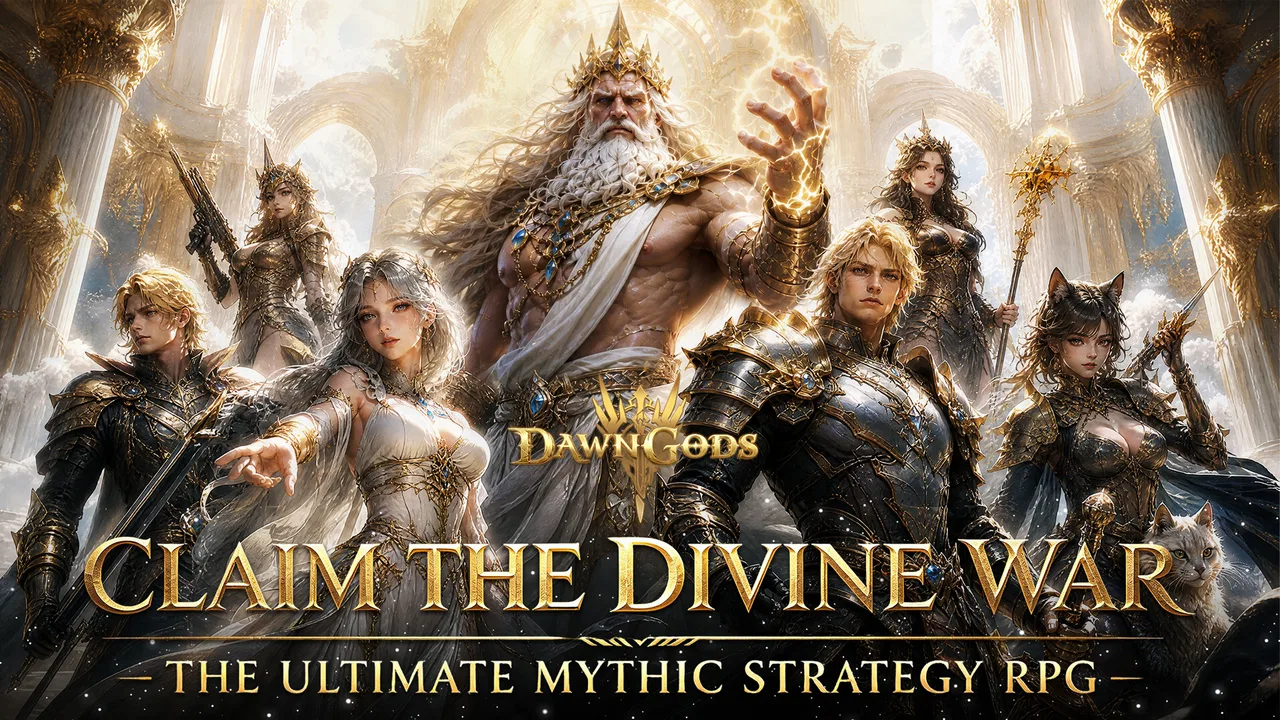
Dawn Gods
- 4.5
- Rating
- 100.00K
- Installs
- Free
- Price

 Analysis by App-foxy
I spent time with Dawn Gods as a mobile card game built around mythic heroes, gradual progression, and battles that continue to develop while I am away. My first impression was that it sits between a traditional collectible card game and an idle role-playing game: the cards and heroes provide the identity, while the idle structure makes it easier to check in briefly rather than commit to a long session.
That combination makes it interesting for a shared household device. One person can handle a short session during a break, then another family member can use the same phone for something else without needing a long uninterrupted match. At the same time, the game has enough character-building and team decisions to give regular players a reason to return. It is free to download, and HUGENSTAR presents it as a teen-rated game, so I would still treat it as a personal game rather than something to hand casually to a young child.
How the idle card format feels in everyday use
I find the idle card format easiest to enjoy when I treat each visit as a quick planning stop: check how the roster is developing, make a considered adjustment, then leave rather than tapping through upgrades just to stay busy. That routine makes the game feel more manageable on a packed day, while also clarifying the trade-off at its heart: convenience comes at the cost of hands-on action. The next section turns to how its world gives those brief decisions a sense of purpose.
You May Also Like

 Blood Strike: 2.5 Anniversary
Blood Strike’s Loadouts Turn Every Drop Into a Tactical Gamble
A close look at Blood Strike’s custom loadouts: how fast access to signature weapons reshapes its battle royale rhythm, rewards preparation, and narrows the gap between fights.

 Pandora - Music & Podcasts
Pandora’s Music Is Easy to Start, but Harder to Recover
Pandora’s strength is its low-effort path from a seed to a station. Its weak spot is how much confidence it asks you to place in connection, setup, and quiet recovery.

 8 Ball Pool
 Is Built on Rivalries, Rematches, and Routine
A close look at the rivalries, rematches, shared routines, and unanswered safety questions that turn a quick pool match into a persistent mobile community.

 Samsung Music
’s Quiet Strength Is Playing What You Already Own
Its reach comes less from spectacle than from dependable access to a personal library. That simplicity is both the app’s strongest retention engine and its ceiling.

 AccuWeather: Weather Radar
AccuWeather Review: A Quick, Clear Forecast for Everyday Decisions
For everyday plans, the best forecast is the one you can understand quickly. AccuWeather makes rain timing, radar, and local conditions easy to act on, with a few trade-offs.

 Hill Climb Racing
Why Hill Climb Racing Still Turns Crashes Into One More Run
A tiny car, a bumpy hill and one more upgrade: Hill Climb Racing keeps resurfacing because its simple chaos makes every near-miss feel personal.
More From Our News Desk
View All News


A good fit for short check-ins
The most useful part of Dawn Gods is its rhythm. Instead of demanding that I sit down for every battle from beginning to end, it encourages a cycle of checking progress, improving heroes, adjusting a team, and sending the group back into the next challenge. That structure works well when I have only a few minutes, such as while waiting for an appointment or taking a short break between tasks.
In a normal household scenario, I could use the game on my phone in the evening, finish a round of upgrades, and put the device down. Someone else might then use the phone for messaging or streaming without needing to continue my session. When I return, the useful question is not whether I can play for hours, but whether the progress waiting for me gives me a worthwhile decision to make. For players who enjoy that kind of light routine, the design is more convenient than a conventional card battler that expects constant attention.
There is a trade-off, though. Idle progression is not the same as active strategy. If I prefer every move to depend on my timing, bluffing, or rapid reactions, this game can feel less demanding than a head-to-head card game. Its appeal comes from planning a stronger roster over time, not from making every second of a match tense.
What the hero loop adds to a card game
The central attraction is the idea of summoning and evolving mythic heroes, then organizing them to face darker threats. That gives the card format a clear sense of collection and improvement. I am not simply drawing a hand and trying to win one isolated encounter; I am building a longer-term group whose strength depends on how I develop it.
One practical tip is to resist spending every available resource immediately. In an idle RPG, a small upgrade can feel satisfying, but saving resources until I understand which heroes work well together usually produces better decisions than improving whichever character happens to be visible first. I found the game more enjoyable when I treated each upgrade as part of a team plan rather than as a series of unrelated power increases.
Another useful habit is to check the roster before beginning a new stretch of play. A hero that looks impressive alone may not be the best choice for the current group. Even without turning the game into a spreadsheet exercise, comparing roles and arranging a balanced lineup gives the collection system more meaning. Players who like experimenting with combinations will find more depth here than someone who only taps the most obvious upgrade button.
Progression is convenient, but not completely frictionless
The idle structure reduces the pressure to stay online, but it can also make progress feel uneven. There are moments when the best action is simply to wait for more resources or return after the game has accumulated something useful. That is comfortable for a casual routine, yet it may frustrate anyone who wants a steady stream of meaningful choices.
I also think the free-to-play structure deserves attention before anyone begins investing heavily. Optional purchases range from $0.49 to $749.99 per item. That is a very broad span, and it changes how I would approach the game on a shared device. I would not let a child or another casual user make purchases freely, even if the game itself is easy to understand. A household should agree in advance about who manages spending and whether the game is being played only as a free experience.
My advice is to treat purchases as a separate decision from enjoyment. First play long enough to see whether the summoning, evolving, and team-building loop remains fun without spending. If the basic routine already feels repetitive, buying more resources is unlikely to solve that problem. Spending may speed up progress, but it does not replace the need for a roster that I actually enjoy managing.
Shared-device boundaries matter more than usual
Dawn Gods is better suited to one clearly identified player profile than to a phone passed between several people who all expect separate progress. I would decide whose game it is before installing it. If two household members want to play, they should coordinate around the account or device setup rather than assuming that each person can safely take over the same session.
This is not just an organizational detail. In a progression game, an accidental tap can change a team, consume a resource, or alter the direction of a collection. I would avoid letting a younger family member experiment inside an adult player’s roster, and I would not use a shared device without first explaining which parts of the game are personal choices. The safest routine is simple: one person handles summoning and purchases, while others watch or play only when the owner is present.
A useful household arrangement is to keep play sessions separate by time. For example, one person can check the game after dinner, then hand over the phone for unrelated use once the session is finished. This avoids the confusion of two people trying to remember which heroes were upgraded or which plan was being tested. It also makes it easier to notice when the game is becoming a habit that takes more attention than intended.
Coordination makes the collection more enjoyable
If more than one person in the home enjoys card and RPG games, discussing the roster can be part of the fun. I like the idea of one player explaining why a particular hero was chosen, while another suggests a different arrangement for the next challenge. That kind of conversation adds a social layer without requiring everyone to play simultaneously.
Still, coordination works only when the main player remains in control of the account and progression decisions. I would not recommend a system where several people spend resources independently. A shared notebook, a quick note on the device, or simply agreeing to ask before making major changes can prevent avoidable arguments. The aim is not to create a formal family schedule; it is to protect the decisions that make a collection feel personal.
For a couple or older siblings, the game can work well as a low-pressure comparison activity. One person may prefer a safer lineup, while another may enjoy trying a less obvious combination. The idle pace gives time to discuss those choices instead of forcing an immediate answer. That is a genuine strength when the household wants a game to talk about, not just a game to play silently.
On the other hand, a shared roster is a poor idea for competitive personalities. If one player constantly replaces another person’s choices, the convenience of a common device quickly becomes a source of friction. I would choose individual play boundaries over forced cooperation, especially because the game’s long-term value comes from seeing my own decisions develop.
Teen rating and trust in the home
The teen content rating is important context for parents and guardians. It does not automatically tell me how every family will feel about the game, but it does mean I would introduce it with a conversation rather than assume it is suitable for everyone in the household. The themes of mythic heroes, darkness, summoning, and combat may be perfectly acceptable for one teenager and less comfortable for a younger child.
I would also explain the difference between free access and optional spending. Because the game includes in-app items, a teenager should know whether purchases are allowed, who approves them, and what to do if a purchase screen appears unexpectedly. Those boundaries are more useful than simply saying “be careful,” especially on a device that several people use.
Trust also includes respecting the main player’s progress. A teenager who borrows a parent’s phone may be curious about the heroes, but curiosity should not mean opening the collection and changing the lineup. Likewise, an adult using a teenager’s device should avoid treating the game as disposable entertainment if the younger player has invested time in it. Clear ownership makes the experience calmer for everyone.
Who will get the most from it
I would recommend Dawn Gods to players who enjoy collecting characters, improving a team over time, and checking in regularly rather than playing one long match. It is especially suitable for someone who likes the fantasy of an RPG but does not always have the time for a traditional campaign. The card presentation gives the roster a collectible identity, while the idle approach makes progress easier to fit around school, work, or household routines.
It may also suit a returning mobile player who wants something less demanding than a real-time multiplayer game. There is no need to reserve a long block of time for every visit. A short session can be enough to review progress and make one or two decisions, which is a practical advantage on a busy day.
I would be more cautious about recommending it to players who want deep manual control in every encounter. Someone who prefers carefully timed attacks, direct movement, or highly interactive opponent play may find the idle foundation too passive. Likewise, people who dislike randomized collection systems or any form of optional spending should approach it as a free trial and set firm limits before investing time.
How it compares with familiar alternatives
Compared with a classic card battler, Dawn Gods places more emphasis on the growth of a hero collection and less on the drama of a single hand. A traditional card game may reward reading an opponent and managing a tightly limited deck during a match. Here, I get more satisfaction from deciding which mythic heroes deserve attention and how the roster should develop between battles.
Compared with a fully manual RPG, it is lighter and easier to fit into a busy schedule. I do not need to prepare for every session as if I am entering a long quest. The cost of that convenience is reduced involvement. A player who wants exploration, direct control, and a strong sense of physical place may prefer a conventional role-playing game instead.
Compared with a pure idle game, the card and hero-collection elements give me more ownership over the direction of progress. The roster is not just a number going upward; it invites choices about summoning, evolution, and team composition. That distinction is why I would pick this over a completely hands-off idle title when I want at least some strategic involvement.
Practical details before installing
The game is free, runs on Android devices using version 6.0 or later, and is currently listed as version 1.0.30. Its release date is December 4, 2025. Those details make it accessible to many older Android phones, although the actual comfort of play will still depend on the device and how smoothly it handles the game.
Its audience appears to be growing: the listing shows over ten thousand installs and an average rating of 4.5 from around 2.6 thousand ratings. I read that as a positive sign of early interest rather than a guarantee that every player will enjoy the same pace. The review count is around two hundred, so I would still judge the game by its actual loop and spending approach instead of relying on popularity alone.
Before installing on a family phone, I would check who owns the device, who can approve purchases, and whether the main player is comfortable with others opening the game. I would also make sure the person using it understands that progress decisions are not temporary experiments if they affect a shared roster. These small steps matter more here than they would for a disposable puzzle game.
My household verdict
After trying the game, I see Dawn Gods as a relaxed collection-focused card RPG rather than a replacement for a competitive card table. Its strongest quality is the balance between mythic hero development and short, repeatable check-ins. I can make progress without dedicating an entire evening, yet I still have enough control over summoning, evolution, and team choices to feel involved.
For a household, I would keep ownership clear, discuss spending before play begins, and treat the teen rating as a reason for age-appropriate supervision rather than an afterthought. It can be a pleasant shared topic, especially when family members compare hero choices, but I would not encourage several people to edit one roster without agreement.
My recommendation is to try it as a free, personal idle card game first. If you enjoy watching a collection grow and making occasional team decisions, it has a comfortable place in a daily routine. If you need constant action, complete manual control, or a tightly bounded spending model, a conventional card game or a more traditional RPG will probably serve you better. For the right player, though, HUGENSTAR’s game offers an approachable way to build a mythic roster without demanding that every visit become a major gaming session.
FAQs for Dawn Gods
01What is Dawn Gods and what can I expect from the gameplay?
Dawn Gods is an immersive strategy game available on Android and iOS where players assume the role of a deity guiding their civilization to prosperity. Expect a blend of city-building, resource management, and strategic combat. The game offers a rich narrative with quests and challenges that evolve as you progress, providing hours of engaging gameplay.
02Are there any in-app purchases or ads in Dawn Gods?
Yes, Dawn Gods includes in-app purchases that allow players to buy resources, special items, or unlock certain features more quickly. While the game is free to play, these purchases can enhance your experience. Additionally, there are occasional ads, but they are not intrusive and can often be skipped after a few seconds.
03Does Dawn Gods require an internet connection to play?
Dawn Gods requires an internet connection to access and save your progress, participate in multiplayer events, and receive updates. While some offline features may be available, the full experience and community interactions are best enjoyed online, ensuring you can fully engage with all game features and events.
04How does Dawn Gods handle user privacy and data security?
Dawn Gods prioritizes user privacy and adheres to strict data security protocols. The app collects minimal personal information necessary for gameplay and offers options for users to manage their data. Players are encouraged to review the privacy policy to understand how their information is used and protected.
05Is Dawn Gods suitable for all age groups?
Dawn Gods is rated for a general audience, but due to its strategic complexity and some in-game purchases, it is best suited for players aged 12 and up. Parents should be aware of the game's content and in-app purchase options, ensuring that it aligns with their expectations for suitability.
Pros
- Engaging storyline with mythical elements.
- Stunning graphics and immersive sound.
- Smooth gameplay with intuitive controls.
- Regular updates with new content.
- Diverse character customization options.
Cons
- Requires a stable internet connection.
- In-app purchases can be costly.
- Battery consumption is relatively high.
- Occasional lag during intense scenes.
- Limited offline functionality.

Dawn Gods
Gallery